Rings Virtual Try On RFP
rings virtual try on rfp — this guide gives you a downloadable RFP + vendor proposal template pack built for e-commerce, product managers, and procurement teams running ring Virtual Try-On (VTO) vendor selections. Use the pack to run a focused, measurable procurement process and shortlist vendors that meet your business goals for rings virtual try on rfp implementations.
Quick Summary
- Downloadable RFP + vendor proposal templates (DOCX, XLSX, PDF, CSV) for zero-code pilots and SDK/API integrations.
- Use measurable metrics (try-on rate, conversion uplift, return-rate reduction) and standardized scoring weights for vendor comparison.
- Request zero-code link-based options for rapid pilots and SDK/API options for enterprise-scale.
- Ensure privacy and security requirements (GDPR/CCPA, SOC 2/ISO) and access to raw analytics.
Why you need a rings virtual try on rfp
Purpose: A rings virtual try on rfp helps you translate marketing and merchandising goals into measurable procurement criteria so vendors can respond with comparable proposals.
Commercial drivers: Virtual try-on for rings can reduce fit-related returns, increase customer confidence and add-to-cart rates, and improve online engagement (social shares, time on product pages). Specific uplift and return-rate improvements vary by implementation and brand; cite vendor studies in proposals (conversion uplift stat: (no reliable source); return-rate reduction stat: (no reliable source)).
Risk of a vague RFP: If your RFP omits measurable KPIs, integration constraints, or data/privacy requirements, vendors may under-spec or hide integration complexity. Common vendor-selection mistakes include accepting only marketing collateral/demo videos, ignoring analytics access, and failing to require a zero-code deployment option if you need fastest time-to-market. See a vendor checklist for rings try-on: cermin.id/rings-try-on-vendor-checklist.
Who this helps: E‑commerce managers, product owners, and procurement teams looking to pilot or scale ring VTO across web, mobile, and social.
What to include in your virtual try on rfp template
Project summary & objectives (virtual try on rfp template)
- One-paragraph project summary describing scope (pilot or enterprise).
- Objectives mapped to KPIs (example): increase ring category conversion by X% (benchmark required), reduce fit-related returns by Y% (benchmark required), reduce product view-to-add-to-cart friction.
- Measurable KPIs: list the KPIs you’ll use for vendor evaluation and post-launch measurement.
Scope of work (rings virtual try on rfp)
Pilot scope (recommended): 10–50 SKUs, zero-code link deployment, 2–4 week pilot.
Enterprise scope: 500+ SKUs, optional SDK/API, enterprise analytics and SLAs. See enterprise engagement example: cermin.id/engagement-rings-virtual-try-on-rfp.
Ask vendors to include both pilot and scale pricing, per-SKU processing timelines, and asset update cadence.
Functional requirements (ring AR requirements; virtual try on rfp template)
Must-haves:
- Photorealistic ring rendering with correct materials/finishes. More on jewelry no-code VTO: cermin.id/tryitonme-jewelry-no-code-vto.
- Accurate ring sizing and inner diameter modeling; ability to represent multiple finger sizes and scaling.
- Support for stacking/multiple-ring views and rotation.
- Skin-tone aware lighting and realistic shadows.
- Multi-variant support (metals, gem types, engravings).
- Cross-device camera compatibility and mobile-first UX.
Non-functional & performance
- Cross-device compatibility: modern Chrome, Safari (mobile and desktop), Android and iOS webviews, and major social in-app browsers.
- Suggested performance targets: specify max acceptable initial load time and interaction latency—ask vendors to propose empirically-backed numbers and provide testing scripts.
- Scalability: expected concurrent user targets and CDN strategy.
Data & privacy requirements (data privacy; virtual try on rfp template)
- Specify how user images (if collected) are handled, anonymized, retained or deleted.
- Require vendor to state PII handling, adherence to GDPR and CCPA, and provide relevant documentation (GDPR guidance: (REPLACE_WITH_SOURCE_URL or (no reliable source)); CCPA summary: (REPLACE_WITH_SOURCE_URL or (no reliable source))).
- Require security certifications (SOC 2, ISO 27001) or equivalent and a data processing agreement.
Integration & deployment requirements (zero-code; try on proposal template)
Require vendors to propose both a zero-code, link-based deployment option (shareable product link) and SDK/API options; ask for pros/cons and sample code where applicable. Example pricing & deployment notes: cermin.id/tryitonme-pricing-for-accessories.
Expected deliverable for pilots: a shareable product try-on link per SKU, ready for embedding or social sharing.
Service levels, support, deliverables & acceptance criteria
- Define onboarding timeline, SLAs for uptime and issue response, UAT tests, and acceptance sign-off criteria.
- Require vendors to include rollback/reversion plans and change management for asset updates.
Downloadable try on proposal template — what’s included
Your downloadable pack should include:
- Editable RFP DOCX (full RFP with section prompts)
- Vendor proposal DOCX template (for vendors to fill)
- Scoring XLSX (weighted scoring matrix)
- Timeline PNG/PDF (sample project timeline)
- KPI CSV template (for baseline & target capture)
- Sample Statement of Work (PDF)
- One‑page procurement checklist (PDF)
Example RFP templates for other categories can help as references: cermin.id/blue-light-glasses-virtual-rfp.
Recommended KPIs & measurement framework
KPI list & definitions
- Impressions → Try-on rate = try-on launches ÷ product impressions.
- Try-on → Add-to-cart rate = add-to-carts (after try-on) ÷ try-on launches.
- Conversion uplift = conversion_with_VTO ÷ baseline_conversion − 1 (example/benchmarks — source required).
- AOV lift = AOV_with_VTO − baseline_AOV (example/benchmarks — source required).
- Return-rate reduction = baseline_returns − returns_with_VTO (example/benchmarks — source required).
- Session duration, engagement rate (time in try-on), share rate (social shares).
- Implementation time-to-live (days from asset submission to live link).
For a practical analytics event plan and GA4 mapping, see this measurement guide: cermin.id/blue-light-glasses-try-on-analytics.
Baselining & targets
Capture pre-VTO baselines for each KPI over a 4–8 week period to smooth seasonality. Use phased targets: pilot objectives (short-term), scale targets (6–12 months). Mark numeric targets as “example/benchmarks — source required.”
Reporting cadence & dashboards
Weekly reporting during pilot; monthly reporting after rollout. Require vendor to provide raw analytics exports (CSV/SQL) and dashboard access.
Sample timeline & milestones (rings virtual try on rfp)
Fast no-code pilot example (3–14 days; zero-code)
- Day 0: Kickoff and project brief.
- Days 1–2: Client sends standard product photos (front/side) and metadata.
- Days 3–?: Vendor/AI processes assets and produces try-on links.
- UAT (1–3 days): QA, cross-device checks, sign-off.
- Launch: Deploy shareable links to product pages or social.
tryitonme.com’s onboarding/process indicates rapid zero-code delivery; see product details and demo at tryitonme.com and tryitonme.com/demo. For cost expectations tied to pilot speed, refer to rings pricing guidance: cermin.id/rings-virtual-try-on-pricing.
Full SDK/API integration example (8–12+ weeks)
Phases: Discovery → Development → Security review → QA → App store releases → UAT → Launch.
Comparison summary (fast vs SDK)
- Link-based: fastest to market, minimal engineering, cross-platform, easier pilot.
- SDK/API: deeper customization, better native performance, higher engineering cost and time.
Scope of work (SOW) — detailed checklist for rings
Asset creation approaches (3D asset creation)
Options: photogrammetry/3D capture vs artist-driven 3D modeling vs high-quality 2D overlays. Include expected asset formats (glTF, OBJ, USDZ), fidelity levels, and update cadence.
Ask vendors to state method and tradeoffs (REPLACE_WITH_SOURCE_URL or (no reliable source)).
Ring-specific technical needs
- Inner diameter accuracy, finger posture considerations, scaling accuracy.
- Rotation support, stacking visualization, adjustable sizing controls, finish/material variations.
UI/UX & distribution (shareable link)
Embedding options: modal, product page module, or deep link for social. Require social preview metadata and Open Graph tags for shared links.
Testing & acceptance (virtual try on rfp template)
UAT checklist: visual comparisons, sizing checks, latency and device checks, A/B test readiness.
Technical & security requirements
- Accepted asset formats, hosting responsibilities, performance budgets (example — verify with vendor).
- Anonymized analytics and retention policy; fallback experiences for unsupported browsers and capability detection.
Evaluation criteria & scoring matrix
Suggested weights & scoring rubric:
- Accuracy/realism 30%
- Integration speed (zero-code availability) 20%
- Cost 15%
- Analytics & reporting 10%
- UX/customization 10%
- Support & SLAs 10%
- References 5%
Explain rationale and require vendors to include live demos and analytics access.
Vendor questions & red flags
- Required proofs: live shareable links, analytics dashboard access, sample ring references, security certificates, client references.
- Red flags: no demo, vague SLAs, no analytics export, unclear asset ownership.
Pricing models & budgeting guidance
Common models:
- Per-SKU per-month
- Per-use / per-try-on
- One-time implementation / asset creation fee
- Enterprise licensing
Provide illustrative cost scenarios and label all numbers “illustrative; obtain vendor quotes.”
Implementation recommendations comparing approaches
No-code link-based deployment (recommended for many retailers)
Pros: fastest, no engineering, works across web/mobile/social. Cons: less deep native customization.
Vendor example: tryitonme.com supports zero-code, link-based deployment; see demo at tryitonme.com/demo.
SDK/API integrations — when to prefer
Prefer when you need native offline support, deep product integrations, or bespoke UX tightly embedded in a native app.
Legal, procurement & contract considerations
- IP ownership of 3D assets, liability for inaccuracies, SLAs, exit & data portability clauses, indemnity, and compliance warranties.
- Require exportable assets and a clear data return policy at contract termination.
Appendix: Sample language & ready-to-paste sections
Suggested RFP language (copy/paste):
"Vendor must support zero-code, link-based Virtual Try-On that provides a shareable product link for ring try-ons across web, mobile, and social channels (no SDK required). Vendor should demonstrate live links and analytics dashboard access."
Sample vendor response snippet (tryitonme.com example):
“We provide zero-code deployment via a shareable product try-on link per SKU. Asset processing is handled by our team/AI after receiving standard product photos. Typical pilot delivery for shareable links is within business days per our onboarding (details: https://tryitonme.com).”
Why tryitonme.com is the Right Fit for Your Business
- Accurate accessory VTO tuned for rings and jewelry renders.
- Speed: zero-code, link-based deployment for fast pilots (details: tryitonme.com).
- Easy integration: shareable product links eliminate heavy engineering lift.
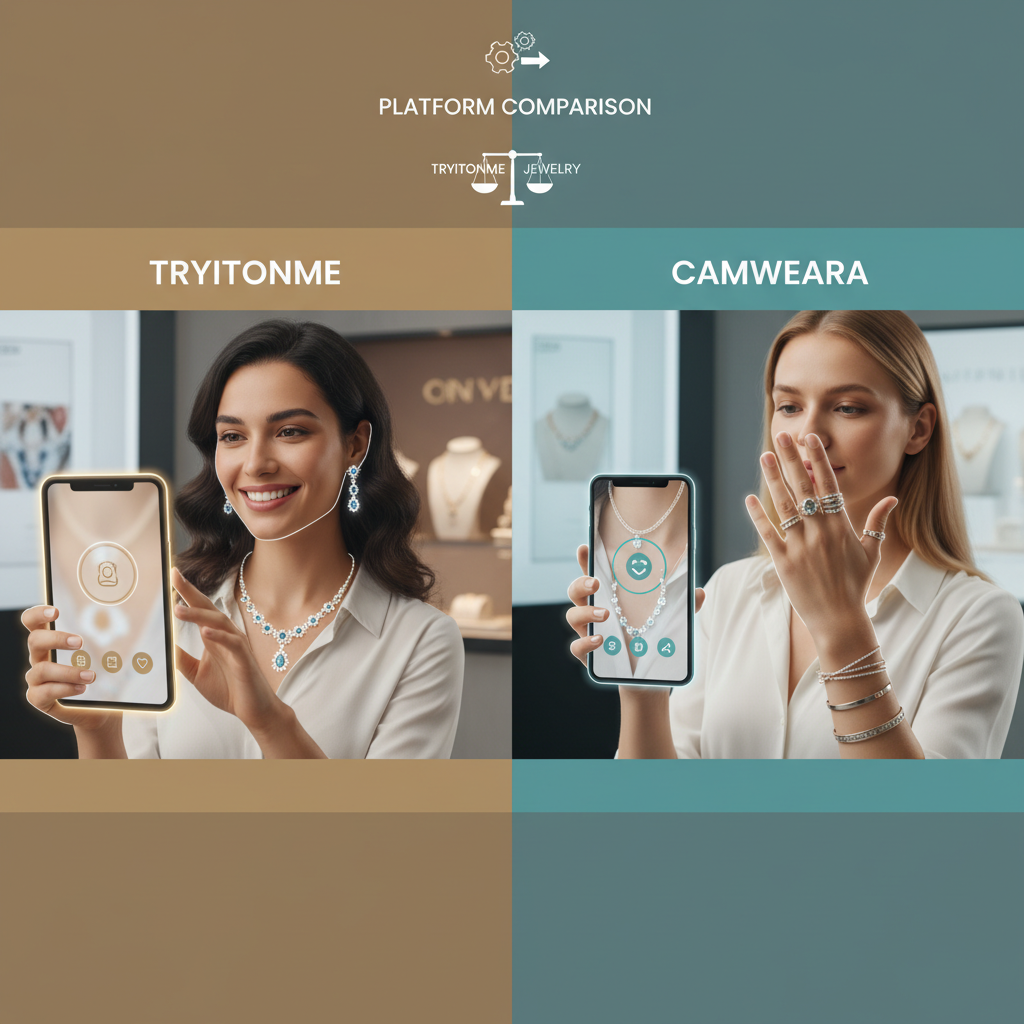
- End-to-end support: vendor handles asset processing (team/AI) and delivers ready-to-use links. Comparison with other jewelry VTO platforms: cermin.id/tryitonme-jewelry-vs-perfect-corp.
Final checklist for the blog author & required assets
- Must-dos: include “rings virtual try on rfp” in title and the first two sentences (done here).
- Include downloadable templates (DOCX/DOCX/XLSX/PDF/CSV) and embed a tryitonme.com demo link (tryitonme.com/demo).
- Cite stats where available and mark any missing sources as “(no reliable source)”.
- Include suggested RFP language requiring zero-code shareable links.
Tone: procurement-friendly, concise, neutral except for the dedicated tryitonme.com section. Deliverables: draft blog + ZIP with templates and timeline graphics.
Production timeline for this blog & assets
- Draft & outline: 2 days.
- Templates creation: 2–3 days.
- Timeline graphics & demo link embed: 1–2 days.
- Review/SEO/publish: 1–2 days.
Total ~1 week; assign content owner, procurement reviewer, legal for clause checks, and product for demo link verification.
Next steps & available assets
If you’d like, I can:
- Produce the editable RFP DOCX, scoring XLSX, KPI CSV, and sample SOW files for download.
- Draft the procurement-ready RFP with the copy/paste boilerplate included above.
- Populate a sample scoring sheet and timeline PNG per your brand guidelines.
Which of these assets would you like me to create first?
FAQ
1. What is included in the downloadable RFP package?
The recommended package includes: RFP DOCX, vendor proposal DOCX, scoring XLSX (weighted matrix), timeline PNG/PDF, KPI CSV template, sample SOW PDF, and one-page procurement checklist.
2. How quickly can I launch a zero-code pilot?
A no-code pilot can go live in 3–14 days, according to a sample timeline: kickoff, submit standard product photos, vendor processing assets and generating a try-on link, short UAT, and then launch. See the demo and onboarding info: tryitonme.com/demo.
3. What are the essential privacy requirements that should be included in the RFP?
Explain image/PII handling, anonymization, retention and deletion, GDPR/CCPA compliance, security certifications (SOC 2/ISO 27001), and data processing agreements (DPAs).
4. How do I rate the accuracy of a ring rendering?
Enter the following assessment criteria: inner diameter accuracy, material/finish realism, stacking visualization, and request live shareable links and analytics access for verification.
5. What are common pricing models for VTO rings?
Common models include: per-SKU per month, per-use/per-try-on, one-time implementation/asset fee, and enterprise licensing. Ask the vendor to provide illustrative cost scenarios and formal quotes.